ECG Electrode FAQs
and clinical use of ECG electrodes
ECG Electrode FAQs
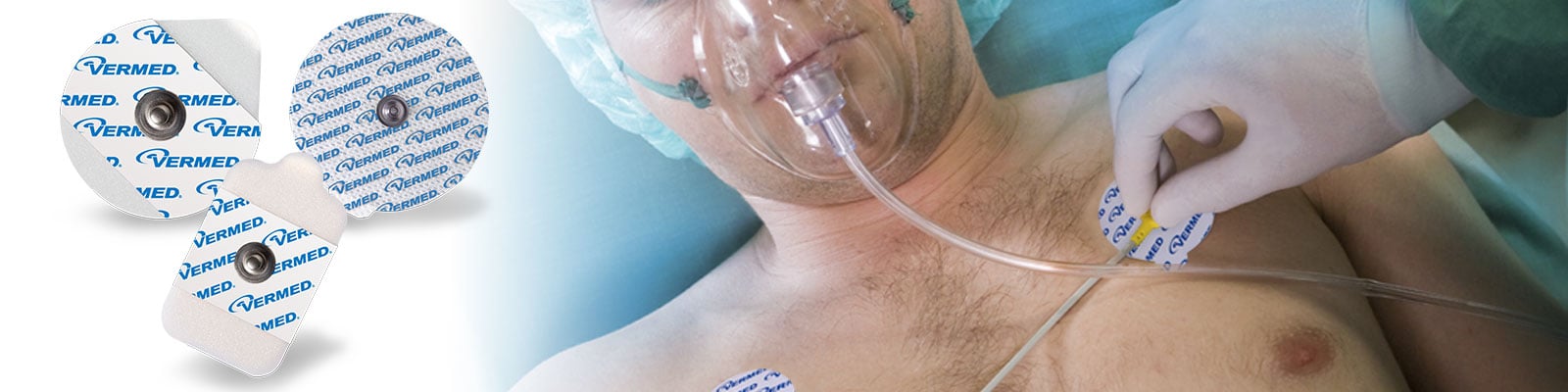
ECG electrodes, also known as ECG stickers or EKG electrodes, are transducers that detect electrical signals from the heart. Electrodes use a conductive gel to provide low and stable impedance when placed on the skin. These signals are interpreted by the ECG or EKG machine to produce waves, which are a representation of voltage vs time. Clinicians will analyze these waves to assess the heart’s rhythm, rate, and overall function.
We offer three different types of electrodes: snap electrodes, tab electrodes, and pre-wired electrodes.
- Snap electrodes have a stainless steel or carbon snap as the application to the leadwire. Our snap electrode offerings include:
- Centered snap electrodes
- Offset snap electrodes
- Tab electrodes have no snap and require a leadwire clip to connect. They are designed for easy application and removal.
- Prewired electrodes have no snap and come with pre-attached lead wires, making them quick and easy to apply. This design reduces set-up time and minimizes the risk of incorrect connections, ensuring reliable signal transmission.
We offer stainless steel snaps and carbon snaps.
- Stainless steel snaps stop corrosion from occurring, eliminating artifacts in the tracing.
- Carbon snaps are MR conditional. This means the electrode can be worn during a scan but cannot be in use because leadwires are not MR conditional. These electrodes show up translucent in a scan image.
Both our stainless steel and carbon snaps contain a Silver/Silver Chloride (Ag/AgCl) sensor that helps to provide accurate trace results.
We offer three different gel types for our electrodes: wet, solid, and hydrogel.
- Wet gel allows faster traces in situations where you need quick and reliable results.
- Solid gel allows easier clean up - no residue is left on the patient after removal.
- Hydrogel is mostly used for tab applications. It allows for easy clean up and is ideal for sensitive skin.
To learn more, check out our video on wet vs solid gel.
Lower chloride content (typically 1%) is gentler on the skin, while higher chloride content (typically 10%) allows for quicker and more reliable traces. We also offer 3% and 7% chloride content options.
We offer three different substrate options for our electrodes: foam, cloth, and tape.
- Foam is the most common substrate and is the best option for general monitoring applications. It is sturdy and the best option for adhering to the skin.
- Cloth is breathable and is best for neonatal, pediatric, and patients with sensitive skin.
- Tape is flexible, thin, and responds well to patient movement.
A “hypoallergenic” electrode means that the electrode is free from common allergens and is not made from natural rubber latex.
To learn more, check out our blog on hypoallergenic ECG electrodes.
We offer various packaging formats to support different clinical needs and inventory preferences:
Bulk Packaging
- Available in resealable or non-resealable pouches
- Pouches typically contain 30, 50, or 60+ electrodes, depending on product configuration
- Ideal for high-volume clinical settings
Single-Use Packaging
- Hygienic, disposable single-use packs designed to reduce the risk of cross-contamination of unused electrodes
- Individual single-use packs are organized in inner boxes within the case for easy distribution and storage
- 3, 5, 10 per pouch
Strips
- Available in either strips of 3 electrodes, 5 electrodes, or 10 electrodes
- Easier to pack, handle, and apply, supporting faster clinical workflows
*Note: all cases are FDA/GSI and include compliant labels.
Our ECG electrode reference numbers follow naming conventions to help identify key product attributes easily. Suffixes and symbols indicate packaging, materials, and configuration details.
Suffix Designations
- NB: No inner box
- T: Tape substrate
- F: Foam substrate
- RT: Radiotranslucent
- SG: Solid gel
Chloride Content
- 3% or 7%: Indicates the amount of chloride in the gel
- If no percentage is indicated, the chloride content is typically 10%
Packaging Quantities
- - #: The number indicates the quantity of electrodes per pouch
- - # - #: When two numbers are shown:
- The first number indicates the quantity of electrodes per strip
- The second number indicates the quantity of electrodes per pouch
General Purpose Electrodes
- Economic cardiac monitoring: ZBrand
- High performance cardiac monitoring: VersaTrode
- Adult sensitive skin monitoring: SofTouch
- Multipurpose EEG & EMG: NeuroPlus
Monitoring Electrodes
Diagnostic Electrodes
- Holter testing: ’91 Series
- Stress testing: PerformancePlus
- Resting EKG/Echo sound and 12-Lead: SilveRest and EKG Tabs
- Radiolucent Scanning: ClearScan
Pediatric & Neonatal Electrodes
We provide Custom Labeling/Private Labeling services for many of the products in our portfolio. With a strong emphasis on quality and cost-efficiency, we can brand and launch these products as if they were your own.
When ready, complete this form and one of our sales representatives will get in touch for next steps.
A 3-Lead ECG is typically used for long-term continuous monitoring.
- Uses 3 electrodes (RA, LA, and LL)
- Monitors the bipolar leads (I, II, and III)
A 5-Lead ECG is typically used for continuous cardiac monitoring.
- Uses 5 electrodes (RA, RL, LA, LL, and Chest)
- Monitors the bipolar leads (I, II, and III) and a singular unipolar lead (depending on the position of the chest lead – positions V1-V6)
A 12-Lead ECG is typically used for cardiac diagnostic testing.
- Uses 10 electrodes – 4 electrodes on all 4 limbs (RA, LL, LA, and RL) and 6 electrodes on precordium (V1-V6)
- Monitors 12 leads (V1-V6), (I, II, and III), and (aVR, aVF, and aVL)
No, we focus exclusively on single-use electrodes, as they are designed to support consistent performance, patient comfort, and infection control. While reusable electrodes exist in the market, our expertise lies in helping you select the best single-use option for your patients and practice.
For more information, check out our blog on how single-use electrodes compare to reusable electrodes.
The duration of use varies by electrode type and gel formulation. Most of our ECG electrodes are designed for 24-hour, 48-hour, or 72-hour wear time, depending on their characteristics. Select pre-wired electrodes are designed for extended wear up to 5 days.
Always refer to the electrode’s pouch labeling for specific duration of use for each product.
Some patients, especially those with sensitive or fragile skin, may experience mild irritation when using ECG electrodes. To help minimize skin irritation:
- Follow proper skin preparation
- Choose the right electrode type, including options designed for sensitive that use gentle, hypoallergenic adhesives